
A High Performance Insulation Panel is an engineered building component designed to reduce heat transfer through roofs, walls, floors, and refrigerated spaces. It usually combines a low-conductivity core with protective facings, sealed joints, or moisture-resistant layers. Common core materials include PIR, PUR, phenolic foam, mineral wool, and expanded polystyrene. Each material behaves differently under fire, moisture, compression, and temperature changes.
Building-science expert Joseph Lstiburek offers a useful standard: “The perfect wall is one that keeps the rain out, the air out, the heat out, and the vapor out.” His statement is not a product specification. It is a reminder that insulation performance depends on the entire assembly. A panel may show an impressive thermal-conductivity value in laboratory testing, yet perform poorly when joints are open, fixings create thermal bridges, or water enters the system.
In practical work, installers measure carefully around windows, corners, and service penetrations. A small gap can become a cold strip across an otherwise efficient wall. That detail matters. So does long-term stability. Some panels lose effectiveness when exposed to moisture, ultraviolet light, or repeated temperature changes.
The best choice depends on climate, building use, fire requirements, structural loads, and installation quality. There is no universal “best” panel. That conclusion feels less convenient, but it is more reliable. Understanding these factors helps designers, contractors, and owners judge whether a High Performance Insulation Panel will deliver real energy savings, not just attractive laboratory numbers.
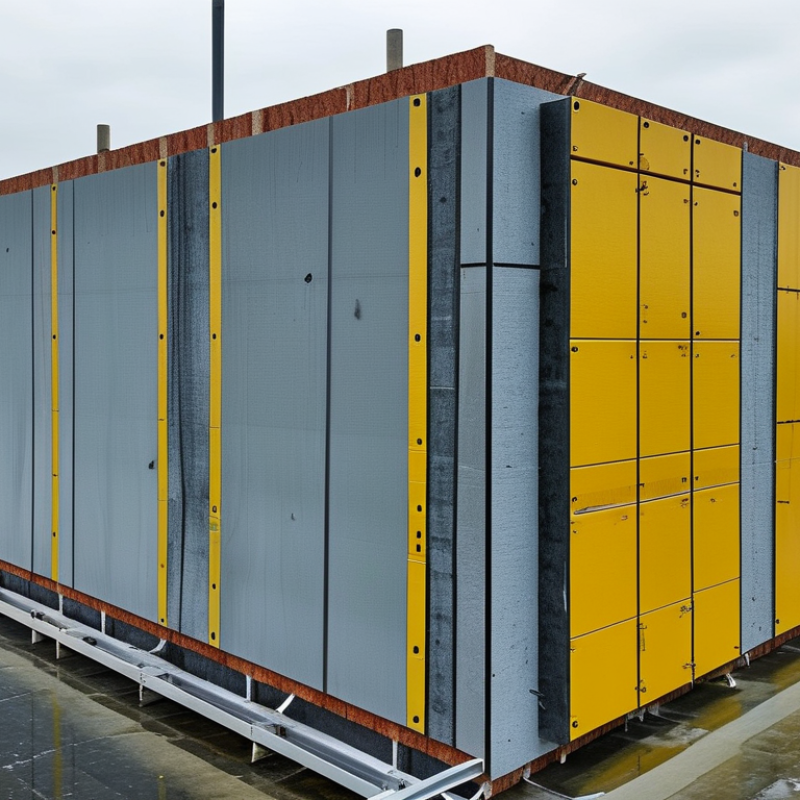
A high-performance insulation panel is a rigid board designed to resist heat flow with minimal thickness. Its key measure is thermal conductivity, written as λ and expressed in W/m·K. Lower values indicate better insulation under comparable test conditions. Panels in the 0.020–0.030 W/m·K range are commonly considered high performing. However, a 0.020 value is not automatically twice as effective as a 0.040 product. Thickness, temperature, moisture, and installation quality also matter.
On site, I would check the declared conductivity, test temperature, and ageing conditions before comparing panels. A 100 mm panel at 0.025 W/m·K provides approximately 4.0 m²·K/W of thermal resistance, excluding surface resistances and thermal bridges. Poorly fitted joints can reduce that advantage. Even a narrow gap can create a cold path. Pay close attention to corners, fixings, and service penetrations.
Numbers need context. A laboratory result may not represent a dusty, wet construction site. This deserves careful review. High-performance panels can support thinner walls, roofs, or floors, but they cannot replace sound detailing. Designers should verify fire classification, compressive strength, water behaviour, dimensional stability, and material compatibility. The conductivity range is useful, not magical. Real performance depends on the complete assembly, workmanship, and long-term exposure.
What Is a High Performance Insulation Panel?
A high performance insulation panel reduces heat flow with less thickness than conventional insulation. This matters in walls, roofs, cold rooms, and compact retrofit projects. The International Energy Agency reported that buildings used about 30% of global final energy in 2022. Better envelopes can reduce this demand, although workmanship remains decisive.
PIR panels commonly achieve thermal conductivity near 0.022–0.028 W/m·K. Phenolic foam can reach approximately 0.020–0.025 W/m·K, according to performance ranges published in European insulation standards. PIR offers strong thermal efficiency and practical handling. Phenolic foam can provide lower conductivity, but it needs careful protection from moisture and damage. Actual results depend on joints, aging, and temperature.
Aerogel blankets typically deliver around 0.013–0.018 W/m·K. They suit narrow spaces, complex edges, and retrofit details. Their flexibility is useful. Their cost remains a serious limitation. Vacuum insulation panels can reach roughly 0.004–0.008 W/m·K, based on technical data reported in building-material research. They are extremely efficient, but punctures can destroy local performance. Installation must be planned like precision work.
Numbers can mislead.
The IEA’s Buildings report supports insulation as a major efficiency measure, but laboratory values do not equal site performance. I have seen excellent panels underperform because gaps were poorly sealed. Designers should compare declared conductivity, fire behavior, moisture resistance, service life, and installation tolerance. A thinner panel is not automatically the better panel.
Thermal performance begins with R-value, which measures resistance to heat flow. A higher value usually means better insulation. However, published R-values need careful interpretation. A panel rated R-10 at 25 millimeters does not always deliver R-10 in a wall assembly. Thickness, joints, fasteners, compression, and moisture can reduce real-world performance.
Thickness matters because heat must travel through more insulating material. Yet adding thickness can create installation problems around openings and connections. High performance panels should fit tightly, without visible gaps. Small gaps can become cold pathways.
Field inspections often reveal uneven cuts or compressed edges. These details are easy to overlook, and they deserve more attention.
Aging also affects thermal resistance. Some panels gradually lose performance as gases diffuse through their cellular structure. Manufacturers may provide aged values to represent long-term behavior. Designers should review these values instead of relying only on initial laboratory results.
ASTM C518 testing uses a heat flow meter to measure thermal transmission through a controlled specimen. The test depends on temperature difference, specimen thickness, conditioning, and surface contact. Results are useful, but they describe the tested sample, not every installed condition.
This is where judgment remains necessary. A perfect laboratory number can become disappointing when moisture, damaged facings, or poor joints enter the project.
What Is a High Performance Insulation Panel?
A high performance insulation panel does more than slow heat transfer. It must also manage fire, moisture, mechanical stress, and ageing. EN 13501-1 classifies reaction to fire, not complete fire resistance. Classes A1 and A2 indicate very limited contribution to fire. Classes B through F represent increasing fire contribution. Smoke production uses s1 to s3, while burning droplets use d0 to d2. Always check the tested panel system, including joints, facings, adhesives, and fixings. A core rating alone can mislead.
Moisture deserves equal attention. Water entering an unsealed edge can reduce thermal performance and encourage hidden deterioration. On site, installers should inspect cut edges, fastener penetrations, and connections around windows. Service life depends on temperature, humidity, loading, ultraviolet exposure, and maintenance. A panel may perform well for decades in a dry wall, yet age faster in a damp plant room. One detail is easy to miss. Laboratory data cannot replace a realistic building assessment. I have seen excellent specifications weakened by poor joint sealing.
Tips: Request the complete EN 13501-1 test report, not only a rating label. Confirm moisture resistance for the actual environment. Check declared thermal performance at the intended thickness. Photograph sealed joints before they become inaccessible. Reinspect vulnerable areas after the first wet season. No system is perfect. That limitation should shape the design.
Safety and durability depend on fire reaction, moisture resistance, and long-term performance. The chart below shows the EN 13501-1 reaction-to-fire classes in descending order of fire performance.
EN 13501-1 classifies construction products from A1 and A2, which have the strongest reaction-to-fire performance, through B, C, D, E, and F. Smoke production and flaming-droplet behavior are reported separately using additional s1–s3 and d0–d2 classifications. Moisture protection requires correctly sealed joints, suitable facings, and proper drainage, while service life depends on exposure, temperature, installation quality, and maintenance. The numerical values shown are an ordinal visualization of the fire-class sequence, not laboratory test results or a universal service-life rating.
What Is a High Performance Insulation Panel?
Selection starts with the required U-value, not the advertised thickness. U-value measures heat flow through the completed assembly. Lower values perform better. England’s Approved Document L targets about 0.18 W/m²K for new dwelling walls and 0.11 W/m²K for roofs. Local codes may demand different results. Climate loads matter. Cold regions need stronger resistance to winter heat loss, while hot climates require careful solar and cooling analysis.
Panel type also changes the design. Some rigid polymer panels provide thermal conductivity near 0.020–0.024 W/mK. Vacuum insulated panels can reach roughly 0.004–0.008 W/mK, according to technical literature from the International Energy Agency. However, damaged edges can reduce their real performance. Laboratory numbers are not site numbers. Check aged conductivity, joints, moisture exposure, fire classification, and thermal bridging.
Cost must include labor, trims, fasteners, waste, and future repairs. The International Energy Agency reports that buildings used about 30% of global final energy in 2022. Better insulation can reduce demand, but only when installation remains practical. Measure openings, service zones, lifting access, and panel tolerances before ordering. Airtightness also deserves attention; the U.S. Department of Energy notes that air leakage can represent 25–40% of heating and cooling energy use in typical homes. A perfect panel with careless joints is an expensive disappointment. Industry data can guide selection, but project-specific calculations should challenge the first specification.
| Panel Type | Typical Thermal Conductivity (λ, W/m·K) |
Approximate Thickness for R-5.0 m²·K/W |
Moisture and Climate Considerations | Fire and Structural Characteristics | Indicative Relative Cost | Installation Limits and Best-Fit Uses | Overall Selection Profile |
|---|---|---|---|---|---|---|---|
| Vacuum Insulation Panel (VIP) | 0.004–0.008 | 20–40 mm | Very sensitive to puncture, cutting, edge damage, and uncontrolled site modifications. Performance can decline if the vacuum envelope is damaged. | Low thickness provides high thermal resistance, but the panel is usually not intended to carry structural loads. Fire performance depends on the envelope and facing system. | Very high | Best where space is extremely limited, such as façade reveals, cold storage details, and retrofit junctions. Requires accurate surveying and careful handling. | Highest thermal performance per unit thickness, but the most demanding and expensive option to install. |
| Phenolic Foam Panel | 0.020–0.023 | 90–115 mm | Generally suitable for dry or controlled assemblies. Joints, perimeter seals, and vapour-control layers must be detailed to limit air leakage and condensation risk. | Low smoke potential compared with some polymeric products; exact reaction-to-fire classification depends on the complete tested product and facing. | High | Useful for thin wall, roof, and floor build-ups. Boards can be brittle and should be cut and supported according to the installation instructions. | Very high thermal efficiency where available thickness is restricted. |
| Polyisocyanurate (PIR) Panel | 0.022–0.028 | 110–140 mm | Closed-cell construction generally provides good moisture resistance, but exposed edges and joints still require proper sealing. Design should account for temperature and ageing effects. | Good strength-to-weight ratio. Fire behaviour varies significantly with facer, density, thickness, and joint configuration; use tested system data. | Medium–High | Well suited to roofs, walls, floors, and insulated metal-panel systems where a relatively thin build-up is desirable. | A strong all-round choice for high U-value targets and limited installation depth. |
| Extruded Polystyrene (XPS) | 0.029–0.036 | 145–180 mm | Low water absorption and good resistance to intermittent wetting. Long-term performance should be checked for below-ground, inverted-roof, or continuously wet conditions. | Good compressive strength and dimensional stability. Combustible; must be protected and used within a compliant assembly. | Medium | Suitable for foundations, basement walls, inverted roofs, and floor slabs where moisture exposure or compressive loading is important. | Durable moisture-resistant option, especially for below-grade and high-load applications. |
| Expanded Polystyrene (EPS) | 0.031–0.038 | 155–190 mm | Water absorption and drying behaviour depend on density, bead structure, coating, and assembly design. Keep protected from prolonged water exposure where required. | Lightweight and economical. Compressive strength varies by grade; combustible and normally requires a suitable protective layer. | Low–Medium | Commonly used in external wall insulation, floors, roofs, and insulated concrete form systems where space is available. | Cost-effective for standard projects that do not require the thinnest possible insulation layer. |
| Mineral Wool Panel | 0.034–0.040 | 170–200 mm | Fibrous insulation can absorb water if exposed. It should be kept dry during construction and protected by a properly drained and ventilated assembly. | Typically non-combustible in suitable product grades and provides useful acoustic absorption. Some grades require mechanical support because of their weight. | Medium | Well suited to façades, rainscreen walls, partitions, and roofs where fire resistance and sound control are priorities. | Strong choice for fire and acoustic performance, with a thicker build-up than rigid high-efficiency foams. |
| High-Density Wood Fibre Panel | 0.038–0.050 | 190–250 mm | Hygroscopic behaviour allows moisture buffering, but the assembly must be designed for drying, rain control, and appropriate vapour movement. | Good acoustic performance and renewable raw-material content. Fire classification and structural capacity depend on density, treatment, and facing. | Medium | Suitable for breathable wall and roof assemblies where a bio-based material and summer heat-delay performance are desired. | Useful for moisture-balanced, low-carbon designs when thicker construction is acceptable. |
Selection note: The thickness figures are indicative calculations based on R = thickness ÷ thermal conductivity and exclude thermal bridges, surface resistances, fixings, joints, ageing, and workmanship effects. Final U-values must be calculated for the complete building assembly using project-specific climate data, condensation analysis, fire requirements, structural loads, and applicable local codes.
It is a rigid board that limits heat flow with relatively little thickness. Thermal conductivity is shown as λ in W/m·K. Lower values usually indicate better insulation under similar test conditions.
This range generally indicates strong thermal performance. However, a 0.020 value is not automatically twice as effective as 0.040. Thickness, temperature, moisture, and installation also affect results.
Divide thickness in metres by thermal conductivity. A 100-millimetre panel at 0.025 W/m·K provides about 4.0 m²·K/W. This excludes surface resistances and thermal bridges.
No. Poorly fitted joints can create cold paths. Check corners, fixings, service penetrations, and panel edges carefully. Even a narrow gap can reduce the expected benefit.
Review the declared conductivity, test temperature, thickness, and ageing conditions. Laboratory figures may not represent a dusty or wet construction site. Numbers need context.
No. EN 13501-1 classifies reaction to fire, not complete fire resistance. Classes A1 and A2 indicate very limited fire contribution. The full system, including joints, facings, adhesives, and fixings, must be assessed.
Water entering an unsealed edge may reduce thermal performance. It can also encourage hidden deterioration. Inspect cut edges, fastener penetrations, and window connections. Edges matter.
Service life depends on humidity, temperature, loading, ultraviolet exposure, and maintenance. A dry wall may protect panels for decades. A damp plant room can accelerate ageing.
Confirm the tested panel system and intended thickness. Seal joints before they become inaccessible. Photograph completed sealing work. Reinspect vulnerable areas after the first wet season. Mistakes remain possible.
A High Performance Insulation Panel is an advanced building material designed to provide strong thermal resistance with limited thickness. Panels in this category typically achieve thermal conductivity between 0.020 and 0.030 W/m·K. Common core materials include PIR, phenolic foam, aerogel, and vacuum insulation panels, each offering different balances of thermal efficiency, flexibility, durability, and cost. Their performance is assessed through R-values, thickness, long-term aging behavior, and laboratory methods such as ASTM C518.
Choosing the right panel also requires attention to safety and service conditions. Fire behavior can be evaluated using EN 13501-1 classifications, while moisture resistance and expected service life influence reliability over time. Designers should compare target U-values with local climate loads, energy requirements, installation space, budget, and construction complexity. A suitable solution must deliver the required thermal performance while remaining practical to install and durable under the building’s expected environmental conditions.
