
China Top Rigid Vacuum Insulation Panel Suppliers? This question matters as energy costs, carbon targets, and compact building systems reshape insulation purchasing. The GlobalABC and UNEP 2023 Buildings Global Status Report states that buildings consume about 30% of global energy and produce approximately 26% of energy-related emissions. That pressure is increasing demand for thinner, higher-performing insulation materials.
A Rigid Vacuum Insulation Panel can deliver very low thermal conductivity within limited wall, roof, refrigeration, and cold-chain spaces. However, published performance depends on temperature, aging, envelope integrity, and test conditions. The International Energy Agency highlights building-envelope efficiency as an important pathway for reducing operational energy demand. Therefore, supplier evaluation should examine more than catalog conductivity. It should include core materials, barrier-film quality, dimensional tolerance, fire behavior, moisture resistance, production consistency, and technical support.
Real projects reveal the difference. A panel may fit tightly around a refrigerator door, yet lose value after careless cutting or puncturing. Strong Chinese suppliers normally provide laboratory data, batch traceability, installation guidance, and evidence from commercial applications. Standards such as ISO 8302 and EN 12667 can support thermal-performance comparison, while factory audits help verify manufacturing claims.
Still, supplier rankings are rarely perfect. Some online lists favor export visibility rather than long-term reliability. This outline therefore considers verified capabilities, not promotional language alone. It compares Chinese manufacturers through measurable quality, customization capacity, certification, delivery performance, and after-sales experience. The goal is practical: identify suppliers able to protect insulation performance from factory production to the finished building or appliance.
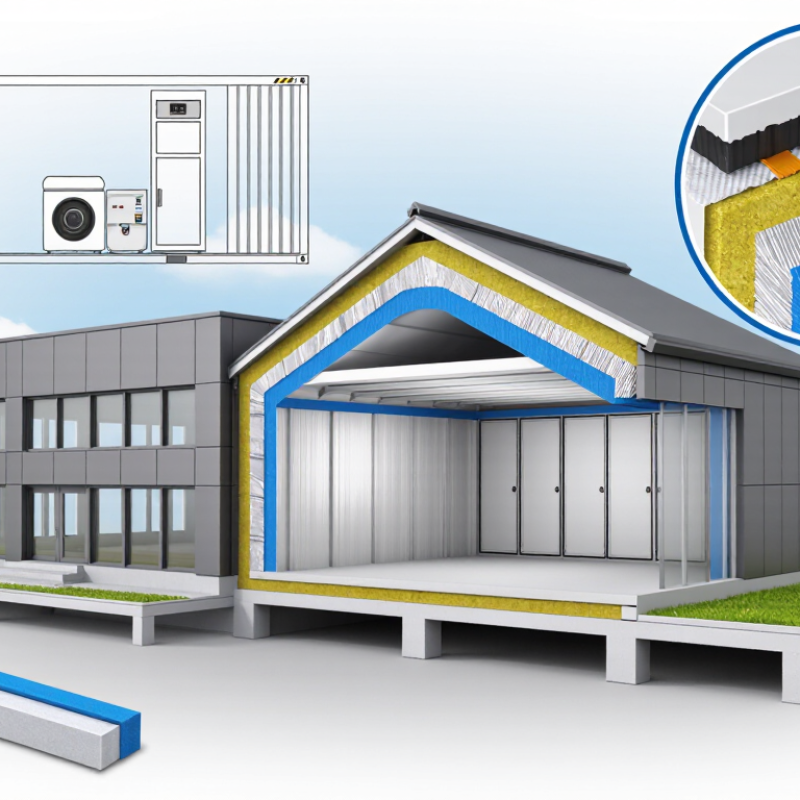
Rigid vacuum insulation panels are thin, high-performance boards designed to reduce heat transfer. They contain a porous core wrapped in an airtight barrier film. Air is removed from the core during production. This creates a vacuum and limits conduction, convection, and gas movement.
Their insulation value is much higher than standard foam at the same thickness. A panel only a few centimeters thick can support designs where wall space is limited. However, the barrier film must remain intact. A small puncture can admit air and reduce thermal performance. Edges also need careful protection. Field inspections often find damage caused by cutting, drilling, or rough handling. That difference matters.
Tips: Check the supplier’s thermal conductivity data, panel dimensions, aging results, and fire documentation. Ask how performance is tested after storage and installation. Specify protective covers for corners and joints. Do not cut panels on site unless the design allows it. Measure each opening carefully before ordering. A perfect drawing can still fail during installation. I would also review moisture exposure and temperature changes, because laboratory values may not match actual building conditions. China has many capable manufacturers, but quality can vary between production lines, so factory audits and sample testing remain practical safeguards.
| Category | Parameter | Typical information | Supplier evaluation notes |
|---|---|---|---|
| Product basics | What a rigid VIP is | A rigid vacuum insulation panel (VIP) uses a porous core enclosed in a gas- and moisture-barrier envelope. Air is evacuated from the core to reduce heat transfer. | Ask for construction details and product data for the exact panel design being quoted. |
| Core materials | Common core types | Fumed silica and glass-fiber cores are commonly used; other core formulations are also available. Core choice affects thermal performance, handling, and cost. | Confirm core composition, density, and any application-specific restrictions in writing. |
| Envelope | Barrier film and edge seams | The envelope is typically a multilayer barrier laminate. Its seams and edges are important because air and water-vapor ingress can gradually reduce vacuum performance. | Request information on film construction, sealing method, edge dimensions, and inspection procedures. |
| Thermal performance | Thermal conductivity | Many VIP products are specified in the low-mW/(m·K) range when new. Actual values vary with core, envelope, temperature, measurement method, and aging; center-of-panel values may differ from whole-panel performance. | Compare test reports on the same basis and ask whether the quoted value is initial, aged, center-of-panel, or whole-panel. |
| Dimensions | Thickness and panel size | Panels are supplied in various thicknesses and plan sizes; dimensions are product- and project-specific rather than governed by one universal standard size. | Check dimensional tolerances, edge allowances, and whether custom sizes affect price or lead time. |
| Service life | Aging and durability | Thermal performance can change over time as gases and moisture enter the envelope. Service life depends on panel design, environment, installation, and handling; it cannot be inferred from initial conductivity alone. | Request aging data, stated test conditions, warranty terms, and the supplier’s definition of service life. |
| Installation | Cutting and puncture risk | A VIP should not be cut, drilled, or punctured in the field: damage to the sealed envelope compromises the vacuum and insulation performance. | Plan layouts around fixed panel sizes and obtain installation instructions before specifying the product. |
| Applications | Typical uses | VIPs are used where high insulation performance in limited space is valuable, including refrigeration, cold-chain equipment, and some building or appliance assemblies. | Verify suitability for operating temperature, moisture exposure, mechanical loads, and applicable fire requirements. |
| Quality checks | Documents and inspection | Useful procurement records include a technical datasheet, test reports, dimensional tolerances, packaging details, and traceability or batch-inspection information. | Compare documents for the same product specification and confirm that testing is performed by a suitable laboratory. |
| Supplier selection | Quotation comparison | A comparable quotation should identify panel dimensions, thickness, core and envelope details, performance basis, order quantity, packaging, lead time, and warranty conditions. | Evaluate suppliers using verifiable specifications, sample consistency, quality documentation, and project requirements—not price alone. |
Note: Values and configurations vary by manufacturer and product. Confirm all performance claims and suitability with current technical documentation for the specific panel.
They are thin boards with a porous core inside an airtight barrier film. Air is removed during production. This creates a vacuum. Edges matter.
Many panels are about 20–50 millimeters thick. They can provide strong insulation where wall or appliance space is limited. Thickness alone does not guarantee performance.
The evacuated core limits conduction, convection, and gas movement. Their thermal resistance can exceed ordinary foam at the same thickness. Real results depend on temperature, moisture, joints, and aging.
Common applications include cold rooms, refrigerated vehicles, building walls, roofs, and compact appliances. They suit projects requiring high insulation in narrow spaces.
A puncture can admit air and reduce insulation performance. Cutting, drilling, or rough handling may damage the barrier film. Even a small hole matters.
Measure every opening before ordering. Avoid field trimming unless the design clearly permits it. Protect corners, joints, and edges from damage. Thermal bridges can remain around fasteners.
Request test reports for conductivity, thickness, density, aging, moisture, and fire behavior. Ask about recognized test methods and test temperatures. Catalog numbers may look better than site results.
Inspect samples for flat edges, intact film, accurate dimensions, and clear labels. Request batch traceability and factory audit access. Ask about damaged-panel replacement and spare-panel planning.
Not always. Humidity, temperature changes, storage, and installation damage can alter heat flow. I may be overly cautious, but real conditions deserve testing.
Rigid Vacuum Insulation Panel (VIP) is a high-performance insulation solution featuring a sealed core material enclosed within a low-permeability barrier envelope. By reducing internal air pressure, it significantly limits heat transfer while maintaining excellent insulation performance in a slim, lightweight structure. These panels are suitable for temperature-controlled transportation, cold storage, building envelopes, appliances, and other applications where space efficiency and thermal stability are important.
When evaluating suppliers in China, buyers should consider panel consistency, thermal conductivity, dimensional accuracy, barrier durability, production capacity, testing procedures, and quality management systems. Chinese manufacturers may specialize in standard panels, customized shapes, integrated insulation components, or export-oriented production. Important considerations also include fire and environmental requirements, moisture resistance, packaging, lead times, technical support, and after-sales communication. A reliable supplier should provide clear specifications, performance data, sample testing, customization options, and documentation that supports smooth international delivery and long-term product use.
