
2026 Top Flexible Vacuum Insulation Panel Types?

Time:2026-10-09 Author:Sophia
0%

As building envelopes become thinner and energy standards become stricter, Flexible Vacuum Insulation Panel systems are gaining attention in 2026. Their appeal is clear: high thermal resistance, low thickness, and adaptable shapes for walls, doors, refrigerated equipment, and transport containers. Yet “flexible” does not mean careless handling. A sharp corner, crushed edge, or poorly sealed joint can reduce performance.

The main types include fumed-silica panels, glass-fiber-core panels, aerogel-based composites, and multilayer flexible constructions. Each type behaves differently. Fumed silica usually offers stable insulation performance. Glass fiber can reduce cost and improve flexibility. Aerogel composites may fit irregular spaces, but their price remains a concern. Multilayer panels can simplify installation, although seams require careful design. Small details matter.

Dr. Michael Simmler, a respected vacuum-insulation researcher associated with EMPA, has stated, “A vacuum insulation panel is only as good as its barrier envelope and service life.” This warning remains highly relevant. A laboratory value cannot describe every jobsite condition. Moisture, punctures, compression, thermal bridges, and repeated bending all deserve attention. Frankly, product comparisons can be confusing. Some specifications look impressive but omit aging data or edge-performance results.

This guide examines the leading Flexible Vacuum Insulation Panel types expected to shape the 2026 market. It compares their core materials, flexibility, thermal performance, durability, installation demands, and practical costs. The goal is not to name one universal winner. Real projects rarely cooperate that neatly. The best choice depends on geometry, handling conditions, expected lifetime, and the consequences of failure.
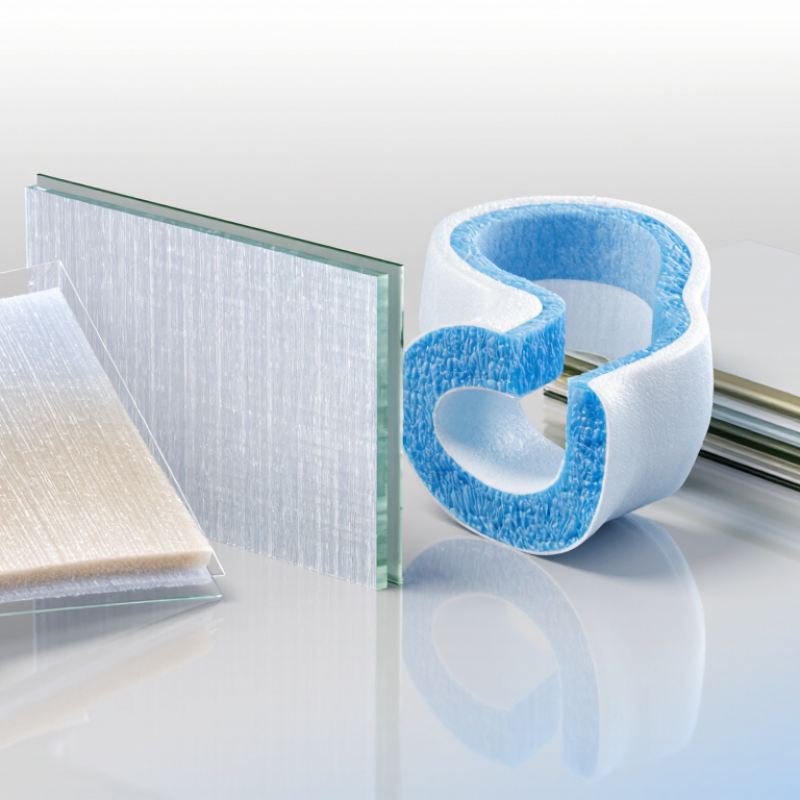
2026 Top Flexible Vacuum Insulation Panel Types?

What Are Flexible Vacuum Insulation Panels and How Do They Work?

2026 Top Flexible Vacuum Insulation Panel Types?

Flexible vacuum insulation panels contain a porous core, a barrier envelope, and a controlled vacuum. The core may use fumed silica, glass fiber, or layered microfibers. Removing air sharply reduces gas conduction. The fine pores also restrict heat movement. Heat has fewer paths to cross.

A well-made panel can reach about 0.002–0.008 W/m·K in laboratory testing, far below many conventional insulation materials. However, performance changes after puncture, compression, or aging. Flexible does not mean endlessly bendable. Tight folds can damage the barrier film and raise thermal conductivity. UNEP’s Global Status Report for Buildings and Construction 2024 states that buildings consume 32% of global energy and create 34% of global carbon emissions. Thin insulation therefore matters in refrigerated transport, compact appliances, and renovation projects. Yet real installation quality often matters more than impressive laboratory values.

Tips: Check declared conductivity, thickness, aging data, and edge details. Use protective layers near screws or sharp corners. Leave enough panel area for safe cutting, because field trimming can expose the core. I have found that a slightly thicker panel with fewer joints may perform better. This is not always obvious. Test samples under expected temperature, pressure, and moisture conditions before large-scale use. Industry reports provide useful benchmarks, but they cannot fully predict careless handling on a busy jobsite.

2026 Top Flexible Vacuum Insulation Panel Types?

What Are Flexible Vacuum Insulation Panels and How Do They Work?

Flexible vacuum insulation panels combine a porous, low-density core with a gas-barrier envelope. Air and other gases are evacuated from the core, reducing gas conduction and convection. The chart compares representative effective thermal conductivity values for common flexible VIP core types at approximately 20–25°C; lower values indicate better insulation performance. Actual results vary with vacuum level, moisture, thickness, envelope design, and aging.

Typical representative values based on publicly reported ranges for vacuum insulation and microporous insulation systems. Values are shown in W/m·K and are not company or brand specifications.

Which Core Materials Define Flexible VIP Performance?

Flexible vacuum insulation panels (VIPs) depend mainly on their core material, not the outer envelope. The core must resist compression, limit gas movement, and maintain low thermal conductivity after repeated handling. Fumed silica usually provides strong insulation, often around 0.002–0.005 W/m·K in fresh panels. It also tolerates pressure changes well. However, its powder structure can make cutting and bending difficult. Fiberglass cores are more forgiving during installation and can support thinner, more flexible panel designs. Their insulation value is generally lower, often near 0.004–0.008 W/m·K.

Aerogel-based cores offer excellent insulation with a lighter structure. Yet, higher material costs and fragile handling remain practical concerns. Open-cell polymer cores can bend more easily, but their long-term vacuum stability needs careful testing.

A flexible panel is not infinitely flexible. Repeated folding may damage the barrier film or create local thermal bridges. That detail is easy to overlook.

The International Energy Agency’s Energy Efficiency 2024 report states that buildings consume about 30% of global final energy. This keeps high-performance insulation commercially relevant. ISO 23993 testing principles also show why declared conductivity must include aging conditions, not only factory measurements. In field projects, installers should check edge sealing, compression, bending radius, and moisture exposure. A 2026 specification that lists only the lowest laboratory value is incomplete. Core selection should match the installation reality. Sometimes, a slightly less efficient core performs better because workers can handle it without damage.

How Do Flexible VIP Types Differ in Structure and Use?

2026 Top Flexible Vacuum Insulation Panel Types?

Flexible vacuum insulation panels differ mainly in core structure, envelope design, and tolerance for movement. Fumed-silica panels use tiny pores to restrict heat transfer. They offer strong thermal resistance and stable performance. Fiberglass-core panels bend more easily and usually cost less. Their thermal performance can decline faster after repeated folding. Composite cores combine mineral fibers with microporous materials. They balance flexibility, strength, and insulation efficiency.

The outer envelope also matters. Metallized multilayer films provide high gas resistance but may suffer from punctures during installation. More robust laminates suit floor edges, curved walls, and refrigerated transport boxes. Some panels use sacrificial margins around the sealed core. These margins protect the vacuum zone during trimming. Never cut the active area. A small nail or sharp corner can destroy local performance.

This distinction matters as building energy demand remains significant. The 2023 Global Status Report for Buildings and Construction estimated that buildings consumed about 30% of global final energy in 2022. The IEA also identifies insulation upgrades as a practical route to reduce heating and cooling demand. Flexible VIPs can help where conventional insulation becomes too thick. Yet laboratory conductivity is not the whole story. Joint gaps, compression, moisture, and careless fixing can weaken field results. The boundary is not always clean. Designers should request aging data, bending limits, and tested junction details before specifying a panel type.

2026 Top Flexible Vacuum Insulation Panel Types? - How Do Flexible VIP Types Differ in Structure and Use?

Flexible VIP Type Typical Core Structure Typical Envelope Structure Typical Thermal Conductivity
(W/m·K)
Flexibility Best-Fit Applications Main Advantages Main Limitations
Fumed-Silica Flexible VIP Nanoporous fumed silica, usually combined with reinforcing fibers or opacifiers to reduce radiative heat transfer. Multilayer high-barrier laminate, commonly using metallized polymer films and seal layers. Approximately 0.002–0.006 High within the designed fold or bend range Refrigerated transport, cold-chain containers, building retrofit areas, appliance insulation and irregular cavities. Very low thermal conductivity, good dimensional stability and relatively strong performance at thin thicknesses. Sensitive to puncture, sharp creases and loss of vacuum; performance depends strongly on barrier quality and edge sealing.
Glass-Fiber-Reinforced Silica VIP Fumed silica or other fine-pore mineral core reinforced with glass fibers or glass-fiber mats. Flexible multilayer gas-barrier film with heat-sealed perimeter edges. Approximately 0.003–0.008 Moderate to high Walls, roofs, doors, prefabricated panels and applications requiring improved handling strength. Better resistance to compression and handling damage than many unreinforced cores; maintains a thin profile. Glass-fiber reinforcement can increase thermal bridges or thermal conductivity if the formulation and fiber distribution are not optimized.
Open-Cell Polymer-Foam VIP Open-cell polyurethane or similar polymer foam with interconnected pores evacuated to a low pressure. High-barrier polymer or metallized laminate designed to limit air and moisture ingress. Approximately 0.004–0.012 High; generally more compliant than mineral cores Curved surfaces, lightweight housings, cold-chain packaging and components requiring a soft or conformable insulation layer. Low density, good conformability and easier adaptation to contoured surfaces. Usually higher long-term gas permeation and greater sensitivity to temperature, compression and aging than silica-based cores.
Perlite-Based Flexible VIP Expanded perlite particles, sometimes blended with fibers or other porous fillers to improve strength and reduce radiation. Multilayer low-permeability laminate with sealed edges. Approximately 0.004–0.010 Moderate; generally less bendable than polymer-foam types Large-area building insulation, appliance panels and applications prioritizing mineral-based, non-combustible core materials. Inorganic core, relatively low material cost and good resistance to elevated temperatures compared with many polymer cores. Particle movement, edge thickening and lower flexibility can complicate installation around tight curves or corners.
Aerogel-Composite Flexible Panel Silica aerogel incorporated into a fibrous blanket, mat or flexible composite support; the panel may be evacuated or used as a non-vacuum alternative depending on design. Protective polymer film, textile facing or, for evacuated designs, a high-barrier laminate. Approximately 0.012–0.025 for common flexible aerogel blankets; evacuated versions may be lower Very high for blanket-style products Pipe and duct insulation, complex geometries, thermal bridges, narrow gaps and retrofit work where cutting or wrapping is required. Can be cut, wrapped and fitted around complex shapes; does not always require a rigid panel format. Common non-vacuum aerogel blankets generally provide higher conductivity than true VIPs and may create dust during cutting unless properly faced.
Segmented or Hinged Flexible VIP Several small VIP modules separated by flexible joints, scored zones or narrow uninsulated bending lines. Continuous or individually sealed barrier films with protected joints and perimeter seals. Approximately 0.003–0.010 within the insulated modules High for folding and controlled shaping Foldable shipping containers, removable covers, battery and equipment enclosures, and products with repeated geometric transitions. Allows controlled folding while preserving the thickness and thermal performance of multiple VIP sections. Joints and module edges can create thermal bridges; repeated bending may damage the barrier film or reduce service life.

Note: Thermal-conductivity values are representative ranges for new, properly sealed materials measured under controlled laboratory conditions. Actual performance varies with core density, vacuum pressure, panel thickness, temperature, moisture, edge seals, aging and installation details. VIPs should not be cut, drilled or sharply folded after manufacture.

What Are the Top Flexible VIP Types for 2026 Applications?

Flexible vacuum insulation panels are becoming more practical for 2026 applications. They fit curved doors, compact cold-chain boxes, and space-limited building assemblies. However, “flexible” usually means adaptable during installation, not freely bendable after sealing.

Glass-fiber-core VIPs offer strong thermal resistance with relatively good flexibility during shaping. They suit refrigeration doors, transport containers, and lightweight wall systems. Fumed-silica-core panels provide very low conductivity and stable performance across demanding temperatures. Their higher cost can limit large-area use. Hybrid cores combine silica with fibrous reinforcement. This approach may improve handling, but actual results depend on density, moisture control, and manufacturing precision. No single core wins everywhere.

For battery enclosures and medical transport, thin segmented VIPs can protect irregular surfaces without adding excessive volume. Their sealed barrier film needs careful protection from punctures, sharp edges, and repeated compression. A small installation mistake can reduce service life. Testing should include thermal conductivity, vacuum retention, edge sealing, humidity exposure, and vibration. Field experience also shows that panel joints often perform worse than the panel center. Designers should allow overlap or use complementary insulation around seams. Some specifications still rely too heavily on laboratory values. Real assemblies deserve more attention.

How Should You Select and Install the Right Flexible VIP Type?

Selecting the right flexible vacuum insulation panel starts with the application, not the product name. Measure available space, operating temperature, humidity, and expected pressure. A silica-core panel often provides strong thermal resistance in tight spaces. A glass-fiber core may offer greater flexibility and easier shaping. Hybrid structures can balance insulation performance and handling strength.

Check the panel’s declared thermal conductivity under real service conditions. Laboratory values may change after aging, compression, or repeated temperature cycles. Confirm the minimum bending radius before installation. A panel that looks flexible can still lose performance after a sharp fold. I have seen installers force panels around corners, creating hidden damage. That mistake is expensive.

Prepare a full-size template before ordering or cutting any surrounding material. Never puncture, trim, or drill the sealed panel unless the design specifically allows it. Keep the barrier surface clean and dry. Use smooth supports, controlled pressure, and protective layers near screws or metal edges. Leave no unplanned gaps between panels; small gaps can create thermal bridges. Seal joints carefully, but avoid crushing the insulation. Installation records should include panel locations, dimensions, and visible defects. Field conditions are rarely perfect. Recheck the design when moisture, vibration, or irregular surfaces appear.

FAQS

What is a flexible vacuum insulation panel?

It contains a porous core, a barrier envelope, and a controlled vacuum. The vacuum removes much of the air. Fine pores further limit heat movement. Flexible does not mean endlessly bendable.

How does a flexible vacuum insulation panel reduce heat transfer?

Less air means less gas conduction. The tiny pores also restrict heat paths. Laboratory conductivity may reach about 0.002–0.008 W/m·K. Real results can differ.

What core materials are commonly used?

Common cores include fumed silica, glass fiber, and layered microfibers. Hybrid cores combine silica with fibrous reinforcement. No single core performs best everywhere.

Which panel type suits curved or space-limited assemblies?

Glass-fiber-core panels offer useful flexibility during shaping. They may suit refrigeration doors, transport containers, and lightweight wall systems. Handle them gently.

When is a fumed-silica core a practical choice?

Fumed-silica panels provide very low conductivity and stable performance across demanding temperatures. Their higher cost may restrict large-area applications. Performance still depends on careful manufacturing.

Can these panels be tightly folded?

Tight folds can damage the barrier film and increase thermal conductivity. Bending should follow the manufacturer’s limits. A sharp corner is risky.

How can installers protect panel performance?

Add protective layers near screws, sharp corners, and exposed edges. Leave enough panel area for safe cutting. Field trimming can expose the core. Small mistakes matter.

Why do panel joints require special attention?

Joints often perform worse than the panel center. Designers should allow overlap or add complementary insulation around seams. Laboratory numbers may look better than the finished assembly.

Where can thin segmented panels be useful?

They can fit irregular battery enclosures and medical transport assemblies. They also support compact cold-chain boxes and renovation projects. Their barrier film still needs protection.

What should be tested before large-scale use?

Test conductivity, vacuum retention, edge sealing, humidity exposure, pressure, temperature, and vibration. Use expected field conditions. I think sample testing is sometimes too optimistic.

Conclusion

Flexible Vacuum Insulation Panel technology combines a porous insulating core with a sealed, low-pressure envelope to greatly reduce heat transfer while maintaining a thin and adaptable form. A Flexible Vacuum Insulation Panel can use different core materials, such as fibrous structures, microporous powders, or composite fillers, and each option affects thermal performance, flexibility, durability, moisture resistance, and service life. Structural variations may include bendable panels, segmented designs, and custom-shaped solutions for curved or space-limited applications.

For 2026 applications, the most suitable types will depend on the balance between insulation efficiency, mechanical movement, temperature range, thickness limitations, and installation conditions. Flexible fiber-based panels may suit irregular surfaces, while reinforced or hybrid constructions can provide greater stability and protection. Proper selection should consider compression, puncture risk, joint detailing, and expected environmental exposure. During installation, panels should be handled carefully, kept dry, protected from sharp edges, and fitted with appropriate coverage and sealing details to preserve vacuum performance and achieve reliable long-term insulation.

Sophia

Sophia

Sophia is a dedicated marketing professional with an exceptional depth of knowledge about her company's products and services. With a keen understanding of market trends and customer needs, she crafts insightful blog posts that not only inform but also engage readers, enriching the company’s online......