
Top 10 Super Insulation Panel Manufacturers Worldwide

Time:2026-09-19 Author:Sophia
0%

The global market for Super Insulation Panel solutions is expanding as builders seek thinner walls, lower heat loss, and more efficient buildings. These panels support cold-storage rooms, industrial facilities, cleanrooms, transport systems, and energy-conscious construction. However, product quality varies widely. Core materials, vacuum stability, thermal conductivity, moisture resistance, fire performance, and installation methods can change real-world results.

This guide examines ten leading Super Insulation Panel manufacturers worldwide. It considers technical capability, manufacturing experience, quality systems, published performance data, and market reputation. Attention is also given to panel thickness, service temperature, edge sealing, custom dimensions, and long-term durability. These details matter on a busy construction site, where a damaged corner or poorly sealed joint can reduce insulation performance.

The ranking should not be treated as absolute. Regional availability, project requirements, and testing standards may influence the final choice. Some manufacturers publish extensive data, while others provide fewer independently verified details. That difference deserves caution.

Not every claim is equally strong.

Where possible, the discussion compares documented specifications, certification evidence, application history, and customer support. It also considers how manufacturers respond to design changes, replacement needs, and installation challenges. A lower-cost panel may appear attractive, yet its total value depends on energy savings, service life, maintenance, and project risk. Readers should verify current technical documents before purchasing. Product ranges and certifications can change. This outline offers a practical starting point, not a substitute for engineering review or site-specific testing.
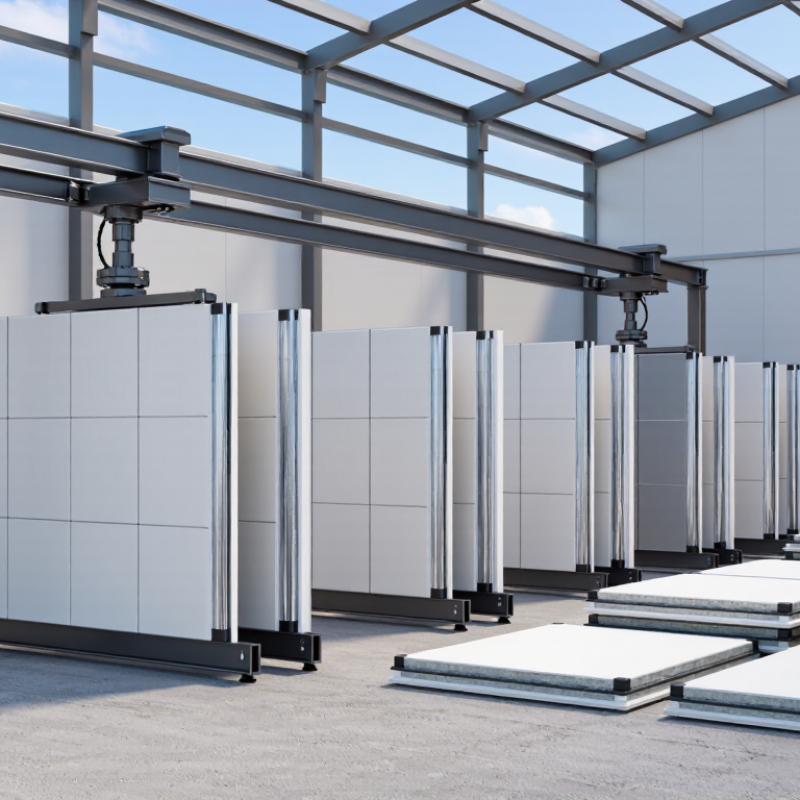
Top 10 Super Insulation Panel Manufacturers Worldwide

Super Insulation Technologies: VIP λ 0.002–0.008 W/m·K vs. PIR λ ≈0.022 W/m·K

Top 10 Super Insulation Panel Manufacturers Worldwide

Super insulation panels are changing how designers approach compact, energy-efficient envelopes. Vacuum insulation panels (VIPs) can reach λ values from 0.002 to 0.008 W/m·K. By comparison, PIR commonly measures around 0.022 W/m·K. This difference allows thinner walls, floors, and refrigeration assemblies. Space savings become valuable in heritage buildings and dense urban projects.

However, laboratory figures need careful interpretation. VIP performance depends on core material, vacuum quality, envelope integrity, temperature, and panel age. A damaged edge can create a visible thermal bridge. Small gaps also matter.

Experienced installers handle panels gently and plan every joint before delivery. They should request declared conductivity, aging data, fire performance, dimensional tolerances, and production quality records from each manufacturer.

PIR is usually easier to cut and install. It may suit large, uncomplicated surfaces where thickness is available. VIP panels demand tighter coordination, but they can solve difficult thermal problems. The best manufacturers provide drawings, installation guidance, and consistent testing methods.

Still, no supplier eliminates every site risk. That is the uncomfortable part. Real buildings contain corners, fixings, moisture, and human mistakes. A reliable specification therefore compares whole-system performance, not λ alone, across the ten shortlisted manufacturers.

Manufacturer Ranking Criteria: R-Value, Aging Performance, Fire Class, and ISO 9001

Ranking the top ten super insulation panel manufacturers requires more than comparing a fresh laboratory R-value. A high initial number attracts attention, yet construction performance changes with temperature, moisture, pressure, and installation quality. Our assessment gives R-value strong weight, while recording test method, thickness, declared conditions, and tolerance. Small differences matter when panels cover thousands of square meters. We also examine whether published data matches technical documents and field observations. Not every impressive number remains impressive.

Aging performance is the practical test. We review accelerated aging reports, long-term thermal resistance, gas retention, edge sealing, and dimensional stability. Panels should be checked after heat, humidity, and repeated handling. Some evidence is incomplete, which must lower confidence rather than disappear in marketing language. Fire class is equally important. We compare independent reaction-to-fire reports, panel facings, joints, and installation details. A tested core cannot automatically represent a complete wall assembly. That distinction is often missed.

ISO 9001 supports reliability, but certification alone does not prove superior insulation. We verify certificate scope, audit status, corrective-action records, traceability, and batch testing. Supplier experience also matters: packaging, site guidance, replacement procedures, and technical response reveal operational maturity. The final ranking balances measurable performance with transparent evidence. It is not perfectly objective. Test conditions differ, and available data can favor larger manufacturers. A careful buyer should revisit the ranking when climate, fire regulations, and service-life requirements change.

Top 10 Global Manufacturers: Regions, Panel Types, Patents, and Production Capacity

The top 10 super insulation panel manufacturers operate across Europe, East Asia, and North America. Their regional strengths differ. European plants often emphasize building renovation and fire-tested systems. East Asian facilities commonly offer high-volume vacuum insulation panels. North American producers focus on cold-chain, appliances, and specialized construction projects.

Panel portfolios usually include vacuum insulation panels, silica-core panels, aerogel composites, and hybrid systems. Vacuum panels deliver very low thermal conductivity, but their barriers can suffer from punctures. Aerogel panels tolerate more handling, although their cost remains higher. Production capacity ranges from several hundred thousand square meters annually to several million. Figures must be checked carefully, because factories may report installed capacity rather than actual output.

Patent activity centers on multilayer barrier films, vacuum retention, edge sealing, and recyclable core materials. Some manufacturers protect panel geometry and automated production methods too. Patent counts alone prove little. A useful evaluation checks active claims, filing regions, expiration dates, and independent test reports. Factory visits can reveal details that brochures omit, such as uneven sealing lines or storage damage. Small defects matter. They can reduce service life and increase installation waste. Capacity, patents, and laboratory results should therefore be compared with project references, batch records, and thermal-aging data. Industry rankings remain imperfect when companies disclose different metrics.

Testing and Certification: EN 17140, ASTM C1484, Thermal Aging, and Airtightness

When comparing the Top 10 Super Insulation Panel Manufacturers Worldwide, testing evidence matters more than impressive thermal claims. EN 17140 can help assess factory-made vacuum insulation panels, including declared thermal performance and production consistency. ASTM C1484 offers another useful framework for vacuum insulation panel specifications. However, buyers should check the exact standard edition and test scope. A certificate is not automatically proof of every advertised value.

Reliable evaluation requires independent laboratory reports, traceable samples, and clear test conditions. Thermal aging testing shows how conductivity may change after prolonged heat exposure. This matters in roofs, façades, and equipment enclosures with daily temperature cycles. Airtightness also deserves close attention. A tiny puncture or weak edge seal can reduce vacuum performance dramatically. Inspectors should review pressure data, moisture control, panel dimensions, and packaging records. Real projects often reveal weaknesses that laboratory samples miss.

Tips: Request test reports for production samples, not only prototypes. Compare initial and aged thermal conductivity. Ask how airtightness is measured, repaired, and monitored during installation. Photograph panel edges before covering them. Small details matter. A cautious purchasing team should also admit uncertainty. Testing may not reproduce every transport vibration, site cut, or installation error. That limitation should appear in the risk assessment, not remain hidden in sales material.

Application Performance: Cold Chain, Buildings, Appliances, and 25–50-Year Service Life

Top 10 Super Insulation Panel Manufacturers Worldwide

Super insulation panels are changing how demanding spaces retain temperature. In cold-chain warehouses, vacuum insulation panels can reduce wall thickness while preserving valuable storage volume. A stable core and carefully sealed barrier layer limit heat transfer around frozen foods, medicines, and fresh produce. Performance depends heavily on installation quality. One puncture can weaken the panel’s thermal resistance.

In commercial buildings, these panels support thinner façades, retrofit projects, and high-performance envelopes. They can help maintain steady indoor temperatures beside sun-exposed walls or winter loading areas. However, designers must check moisture, fire behavior, compression strength, and joint details. Laboratory data matters, but site conditions matter more. Real buildings are rarely perfect.

Appliances also benefit from compact insulation. Refrigerators, freezers, and hot-water equipment can gain usable interior space without increasing external dimensions. Many manufacturers target a 25–50-year service life, yet this figure should be treated as a design expectation, not a promise. Aging, vibration, humidity, and repeated temperature changes may reduce performance. Independent testing, traceable production records, and proper handling provide stronger evidence than marketing claims. Sometimes, a thicker conventional panel may prove more reliable. That possibility deserves honest review.

Top 10 Super Insulation Panel Manufacturers Worldwide - Application Performance: Cold Chain, Buildings, Appliances, and 25–50-Year Service Life
Anonymized global manufacturer comparison using publicly reported industry performance ranges; rankings are indicative rather than a formal market-share ranking.
Rank Manufacturer Profile Primary Production Region Super-Insulation Panel Type Typical Initial Thermal Conductivity
(W/m·K)
Typical Design Thickness Cold-Chain Performance Building Performance Appliance Performance Expected Service-Life Range Relevant Test / Evaluation Basis
1 Global Supplier Profile A
High-volume vacuum-panel manufacturer
East Asia and Europe Core-material vacuum insulation panel with multilayer gas-barrier envelope 0.002–0.005 10–30 mm Refrigerated casesCold rooms
High insulation value where panel puncture risk is controlled
External wall retrofitRoof systems
Suitable for thin-build-up applications with protected installation
RefrigeratorsFreezers
Enables more usable internal volume at reduced wall thickness
25–50 years* Thermal conductivity testing commonly aligned with ISO 8301, ASTM C518 or EN 12667; aging assessment required
2 Global Supplier Profile B
Integrated vacuum-panel and insulation-system producer
Western Europe Microporous or fumed-silica vacuum insulation panel 0.003–0.006 15–40 mm Pharmaceutical shippingFood logistics
Good temperature-retention potential in engineered containers
FaçadesHeritage renovation
Useful where available space is limited and detailing is carefully controlled
Domestic appliancesCommercial equipment
High thermal resistance per unit thickness
25–50 years* Long-term performance depends on envelope integrity, moisture protection and accelerated-aging results
3 Global Supplier Profile C
Appliance-focused super-insulation producer
East Asia Vacuum insulation panel optimized for automated appliance assembly 0.0025–0.006 10–25 mm Portable coolersInsulated boxes
Effective when panels remain dry and mechanically protected
Partition upgradesCompact retrofit
Best suited to localized thermal-bridge reduction
RefrigeratorsFreezersWater heaters
Designed for volume efficiency and low heat transfer
25–40 years* Performance should be validated after forming, lamination and assembly processes
4 Global Supplier Profile D
Construction-oriented vacuum-panel manufacturer
Central and Northern Europe Building-grade VIP with reinforced protective facing 0.004–0.008 20–50 mm Walk-in coolersTemperature-controlled rooms
Suitable for high-performance envelope assemblies
WallsRoofsFloors
High R-value per thickness; requires coordinated detailing and protection
Built-in appliances
Used where compact insulation zones are required
30–50 years* System-level evaluation should include thermal bridges, joints, fasteners and installation tolerances
5 Global Supplier Profile E
Microporous panel specialist
North America and Europe Microporous core panel with low-emissivity internal barrier layers 0.004–0.010 20–60 mm Refrigerated transportCold storage
Suitable for high-value cargo systems when edge sealing is maintained
Interior retrofitModular buildings
Good space-saving option compared with conventional thick insulation
Commercial refrigeration
Can improve cabinet efficiency where assembly geometry permits
25–40 years* Thermal and dimensional stability should be checked under humidity and temperature cycling
6 Global Supplier Profile F
Large-format panel-system manufacturer
East Asia and Southeast Asia Large-format vacuum panel with segmented or laminated construction 0.003–0.008 15–35 mm Cold-chain warehousesInsulated doors
Provides high resistance in thin panel zones
External insulationPrefab construction
Requires impact-resistant facing and qualified installation methods
FreezersDisplay cabinets
Suitable for space-constrained equipment designs
25–50 years* Panel layout, seam treatment and protection from drilling or cutting are critical to durability
7 Global Supplier Profile G
Specialty high-temperature insulation producer
Japan and South Korea Silica-based vacuum insulation panel for controlled industrial environments 0.002–0.006 10–30 mm Medical logisticsFrozen food
High thermal resistance for compact insulated packaging
Energy retrofits
Applicable to protected interior or cavity installations
Heat-pump unitsWater heaters
Useful where insulation thickness and operating temperature are constrained
25–40 years* Application temperature limits and envelope durability must be confirmed for each product system
8 Global Supplier Profile H
Custom-engineered panel converter
North America Custom-shaped VIP and hybrid VIP insulation assemblies 0.004–0.010 15–50 mm Specialty containersLast-mile delivery
Designed around packaging geometry and thermal-load requirements
Window surroundsThermal-bridge zones
Useful for targeted retrofit details rather than unrestricted site cutting
Compact appliances
Custom shapes can improve space utilization
25–40 years* Custom geometry requires verification of seams, corner details, compression and handling damage
9 Global Supplier Profile I
Hybrid vacuum and aerogel insulation supplier
Europe and North America Hybrid VIP, aerogel composite or protected vacuum insulation assembly 0.005–0.015 10–50 mm Reusable shippersCold-chain accessories
Useful where flexibility and damage tolerance are prioritized
Retrofit detailsService penetrations
May offer easier detailing than conventional rigid VIP-only systems
Refrigeration components
Application depends on temperature, compression and moisture exposure
25–40 years* Composite construction should be evaluated for thermal aging, binder stability and moisture resistance
10 Global Supplier Profile J
Regional high-performance insulation-panel producer
China, Europe and emerging markets Standardized VIP or microporous panel for general industrial use 0.005–0.012 20–60 mm Cold roomsInsulated transport
Performance varies with panel quality, joints and service conditions
Industrial buildingsPrefabricated modules
Suitable when the panel is enclosed behind a durable protective layer
Appliance cabinets
Selected according to required thermal resistance and assembly cost
25–40 years* Product-specific declarations, accelerated-aging data and quality-control records should be requested
Technical notes:
  1. Thermal-conductivity values are representative industry ranges for new, intact super-insulation panels; actual results depend on core material, envelope condition, temperature, humidity, pressure and test method.
  2. The 25–50-year service-life figures are design or target ranges, not universal warranties. Long-term performance depends on barrier-film aging, gas permeation, moisture exposure, mechanical damage, joints and installation quality.
  3. Vacuum insulation panels should not normally be cut, drilled, sharply bent or compressed beyond the manufacturer’s stated limits. Whole-assembly U-value and thermal-bridge calculations are required for building and cold-chain applications.

FAQS

What makes vacuum insulation panels different from PIR panels?

Vacuum insulation panels can reach λ values of 0.002–0.008 W/m·K. PIR commonly measures about 0.022 W/m·K. This allows thinner walls, floors, and appliance insulation.

Where are super insulation panels most useful?

They suit cold-chain warehouses, compact appliances, building retrofits, and space-limited façades. They can preserve storage volume. That matters in dense urban projects.

Does laboratory conductivity show real building performance?

Not always. Performance depends on temperature, moisture, vacuum quality, panel age, and installation. A small puncture or open joint can create a thermal bridge.

How should installers handle vacuum insulation panels?

Installers should plan every joint before delivery. Panels need careful handling because cutting or puncturing can reduce resistance. Corners, fixings, and gaps require detailed drawings.

What evidence should buyers request from manufacturers?

Request declared conductivity, aging data, fire reports, dimensional tolerances, and production records. Ask for installation guidance and replacement procedures. Missing evidence should reduce confidence.

How does aging affect expected service life?

Many panels target a 25–50-year service life. This is a design expectation, not a promise. Heat, humidity, vibration, and repeated temperature changes may reduce performance.

Is fire classification based only on the insulation core?

No. Fire performance also depends on facings, joints, fixings, and the complete wall assembly. A tested core does not automatically represent the finished system.

Is ISO 9001 certification enough to prove product quality?

No. Certification supports process reliability, but it does not prove superior insulation. Check certificate scope, audit status, traceability, and batch testing.

When might PIR be the better choice?

PIR may suit large, uncomplicated surfaces with sufficient thickness. It is usually easier to cut and install. A thicker conventional panel may sometimes be more dependable.

Conclusion

Super Insulation Panel technology is reshaping thermal management by combining extremely low conductivity with compact construction. Vacuum insulation panels (VIPs), with thermal conductivity of approximately 0.002–0.008 W/m·K, can deliver significantly higher insulation performance than conventional PIR panels at around 0.022 W/m·K. A reliable manufacturer evaluation should consider R-value, long-term aging performance, fire classification, quality systems such as ISO 9001, and proven production capability.

The leading global manufacturers serve cold-chain logistics, energy-efficient buildings, appliances, and other demanding applications. Their solutions may differ in panel structure, protective barriers, patented designs, and manufacturing scale, but consistent testing remains essential. EN 17140, ASTM C1484, thermal-aging assessments, and airtightness checks help verify performance and durability. When correctly designed, installed, and protected from damage or moisture, advanced insulation panels can support stable thermal efficiency and service lives of approximately 25–50 years.

Sophia

Sophia

Sophia is a dedicated marketing professional with an exceptional depth of knowledge about her company's products and services. With a keen understanding of market trends and customer needs, she crafts insightful blog posts that not only inform but also engage readers, enriching the company’s online......