
Choosing the right Nano Porous Insulation Panel requires more than comparing advertised thermal conductivity. Real performance depends on temperature, moisture, pressure, panel thickness, and installation quality. A panel that performs well in a laboratory may lose efficiency when its edges are damaged or its joints remain poorly sealed.
This guide examines practical selection criteria for building, industrial, and equipment applications. It considers measured thermal conductivity, service temperature, compressive strength, water resistance, fire behavior, and dimensional stability. Independent test reports matter. So do manufacturing consistency and technical support. Product data should identify testing standards, conditioning methods, and expected performance over time.
Small details can change the result.
For example, a 20-millimeter panel may fit a narrow enclosure, but it may not provide enough resistance for a cold-storage wall. A rigid panel can protect valuable space, yet cutting it on site may expose fragile edges. Protective facings, suitable adhesives, and careful joint treatment deserve equal attention. They are often overlooked.
The term “nano porous” is not always used consistently across suppliers. Some products rely on microporous structures, while others include additional nano-scale materials. That difference can confuse buyers. A careful review should compare verified properties rather than impressive terminology.
Reliable decisions come from matching panel specifications with actual operating conditions. Engineers, installers, and facility owners should request samples when possible. A small trial can reveal handling problems before a full installation begins. Even experienced teams may miss one factor. Rechecking assumptions is worthwhile.
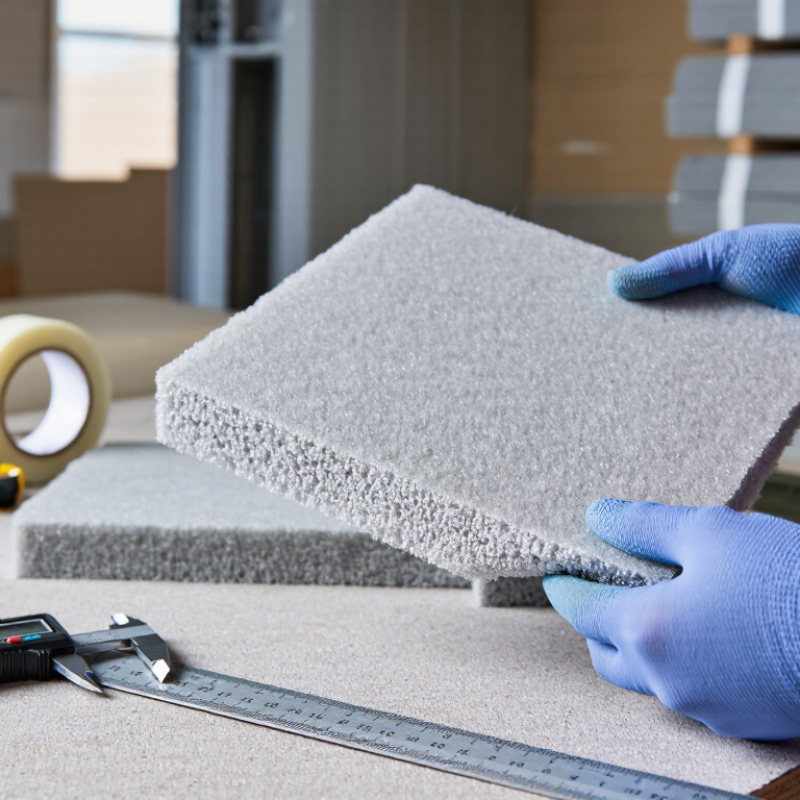
Choosing nano porous insulation panels starts with a measurable thermal target, not a marketing claim. Reported lambda values may range from 0.002 to 0.020 W/m·K. The lower figures usually belong to vacuum insulation panels under controlled laboratory conditions. Silica aerogel-based products often fall near 0.012–0.020 W/m·K. These ranges align with test approaches described in ISO 8301, ISO 8302, and ASTM C177.
Real projects are less perfect. Moisture, compression, joints, aging, and surface temperature can increase heat flow. The ASHRAE Handbook—Fundamentals identifies these boundary conditions as important when applying laboratory conductivity data. A panel rated at 0.004 W/m·K may not deliver that value across every installation. I have seen small edge gaps undermine an otherwise excellent insulation design. That detail is easy to underestimate.
Tips: Compare λ values at the same mean temperature and test method. Request declared and design values, not only the best laboratory result. Calculate required thickness using R = thickness ÷ λ.
For example, a 20 mm panel at 0.010 W/m·K provides about 2.0 m²·K/W before adjustment factors. Check joints, fasteners, and compression separately.
Do not select the lowest number automatically. A slightly higher λ value may perform better when the panel is easier to install accurately. Industry data is useful, but field conditions still deserve a second look.
Nano porous insulation panels usually fall into two practical groups: vacuum insulation panels (VIPs) and aerogel-based panels. Their conductivity can range from approximately 0.002 to 0.020 W/m·K. According to technical data from Oak Ridge National Laboratory, well-made VIPs can reach about 0.002–0.008 W/m·K under controlled conditions. Aerogel products commonly measure around 0.012–0.020 W/m·K. Lower conductivity means better insulation per millimetre, but laboratory values are not the whole story.
VIPs suit tight spaces, cold rooms, and high-performance building envelopes. Their sealed cores provide exceptional thermal resistance. However, one puncture, sharp fold, or poorly sealed edge can reduce performance.
Aerogel panels are usually thicker, yet they tolerate cutting and installation pressure better. European thermal-testing standards, including EN 12667 and ISO 8301, emphasize that temperature, aging, joints, and moisture affect measured conductivity.
Real installations rarely match the catalogue number. I have seen edge details matter more than the core itself.
Tips:
Compare declared and aged lambda values, not only the best laboratory result. Check compression strength, panel thickness, fire behavior, and joint design. For VIPs, plan protection boards and accurate site handling. For aerogel, confirm the tested value at your operating temperature. A 0.004 W/m·K panel may outperform a 0.015 W/m·K panel where space is limited, but lifecycle reliability can justify the thicker option. The difficult part is choosing the lowest risk, not simply the lowest number.
Choosing nano porous insulation panels requires more than comparing a headline R-value. The declared value should come from guarded hot plate or heat-flow-meter testing under ASTM C177, ASTM C518, or EN 12667. Some nano porous cores report thermal conductivity near 0.004–0.008 W/m·K, but performance changes with moisture, temperature, compression, and panel joints. ASHRAE Handbook—Fundamentals 2021 recommends evaluating thermal resistance under realistic conditions, not laboratory values alone. A thin panel may look efficient. Its edges still matter.
Thickness must match the available cavity and the required whole-assembly R-value. ISO 10456 supports using design values that account for moisture and aging. Ask for the declared R-value at installation temperature, not only the best-case number. Then inspect seams, fasteners, penetrations, and compression. A 20-millimeter panel can lose practical advantage when installers leave uneven gaps. Small gaps matter.
A 25-year performance claim needs evidence. Request accelerated aging data, seal integrity results, and projected thermal conductivity after 5, 10, and 25 years. ASTM C1484 provides useful guidance for vacuum insulation panel specifications, but it does not replace project-specific validation. For nanoporous panels without a vacuum envelope, ask how humidity and gas diffusion affect long-term resistance. No universal aging percentage exists. That is the uncomfortable part. Require independent laboratory reports, test uncertainty, and a conservative design value. Recheck the assumptions.
How to Choose Nano Porous Insulation Panels?
Fire safety should be checked before thermal performance. Nano porous insulation panels may reduce heat transfer, but low conductivity does not prove fire resistance. NFPA reported 1,388,500 fires in the United States during 2023. The same report recorded 3,670 civilian fire deaths and about $22.2 billion in property damage. These figures make material classification more than a paperwork exercise.
Request an EN 13501-1 classification report for the exact panel construction. Check the reaction-to-fire class, smoke production, and flaming droplets. A1 and A2 classifications indicate stronger non-combustibility performance than lower classes. However, the complete designation matters. A panel rated A2-s1,d0 is not equivalent to one rated B-s3,d2. Read the test thickness, facing material, joints, and installation method. Small details can change the result.
ASTM E84 reports flame spread and smoke-developed indexes. It is useful for comparing surface-burning behavior, especially in North American specifications. It does not replace EN 13501-1, and the two systems should not be treated as interchangeable. Ask for an independent laboratory report, test date, sample description, and certification scope. A neat certificate is not enough. I would also inspect cut edges and penetrations on site. They are often overlooked. Real installations can perform differently from laboratory samples, which remains an uncomfortable but necessary limitation.
ASTM E84 Flame Spread Index limits by classification
Under ASTM E84, Class A corresponds to a Flame Spread Index (FSI) of 0–25, Class B to 26–75, and Class C to 76–200. EN 13501-1 uses a separate reaction-to-fire classification system, ranging from A1 and A2 through B, C, D, E, and F. These systems are not directly interchangeable, so panel selection should be based on a valid test report for the intended product and installation.
Source basis: ASTM E84 classification thresholds and the EN 13501-1 reaction-to-fire classification structure. The chart shows classification limits, not test results for a specific panel.
Moisture resistance should guide your first inspection. Nano porous insulation can lose performance when water enters its structure. Check vapor permeability, water absorption, and edge protection. Ask for test data under realistic humidity conditions. A dry laboratory result may not reflect a damp service room. I recommend inspecting panels after storage, cutting, and installation. Small wet marks can become serious weak points.
Compression matters where panels support cladding, flooring, or equipment. Confirm the rated load and long-term deformation. A panel may resist brief pressure but fail after months of constant weight. Seams deserve equal attention. Tight joints reduce air movement and heat leakage. Use compatible joint materials, then inspect every corner and penetration. Thermal bridges often appear around anchors, frames, and compressed edges. Even excellent panels cannot correct careless detailing. I have seen heat-loss calculations change after one metal fixing was added.
Tips: Map every joint before installation. Keep panels dry and covered. Avoid excessive compression. Measure surface temperatures around fasteners with an infrared camera. Recheck after seasonal humidity changes. Do not trust one test alone. Installation quality is easy to underestimate.
VIPs may measure about 0.002–0.008 W/m·K under controlled conditions. Aerogel panels commonly measure around 0.012–0.020 W/m·K. Lower values provide better insulation per millimetre. Laboratory values are not everything.
Choose VIPs when space is extremely limited. They suit cold rooms and high-performance building envelopes. Their sealed cores provide strong thermal resistance. However, one puncture can sharply reduce performance.
Aerogel panels are usually thicker but tolerate cutting and installation pressure better. They can suit projects with irregular edges or difficult handling conditions. That extra thickness may improve lifecycle reliability. The choice is not simple.
Compare declared and aged lambda values, not only the lowest laboratory result. Check the tested temperature and humidity conditions. A 0.004 W/m·K panel may save valuable space. A thicker 0.015 W/m·K panel may create fewer long-term risks.
Request a classification report for the exact panel construction. Check fire class, smoke production, and flaming droplets. Review the tested thickness, facing, joints, and installation method. Small differences can change the result.
No. Different systems measure different fire behaviors. Surface flame-spread testing does not replace a full reaction-to-fire classification. Read the complete designation, not only the first letter. A certificate alone is insufficient.
Water entering the structure may reduce thermal performance. Check vapor permeability, water absorption, and edge protection. Request results under realistic humidity conditions. Keep panels dry and covered. Damp marks matter.
Compression can occur beneath cladding, flooring, or equipment. Confirm rated load and long-term deformation data. Tight seams reduce air movement and heat leakage. Inspect every corner and penetration. Details matter.
Thermal bridges often occur around anchors, frames, fasteners, and compressed edges. Metal fixings can change heat-loss calculations noticeably. Use an infrared camera to check surface temperatures. Recheck after seasonal humidity changes. I may underestimate installation effects.
Choosing the right Nano Porous Insulation Panel begins with clearly defined thermal targets. Compare declared lambda values in the 0.002–0.020 W/m·K range, then evaluate whether vacuum insulation panel or aerogel-based cores provide the best balance of performance, durability, and installation practicality. Do not judge insulation by lambda alone: compare the required R-value, panel thickness, available space, and expected thermal performance after 25 years of aging.
A reliable selection also requires reviewing fire safety, using recognized classifications such as EN 13501-1 and ASTM E84 where applicable. Moisture resistance, compression strength, edge protection, seam design, and thermal-bridge losses can significantly affect real-world efficiency. Check how joints, penetrations, and panel damage will be managed during installation, since small gaps may reduce overall performance. By assessing laboratory data together with long-term durability and project-specific conditions, users can select a panel that delivers efficient, stable, and safe insulation performance.
