
Fumed silica is a high-performance material used in silicone sealants, coatings, adhesives, pharmaceuticals, cosmetics, and battery-related applications. Its tiny particles can improve thixotropy, reinforcement, flow control, and product stability. Yet supplier quality is not interchangeable. Surface treatment, purity, bulk density, particle structure, and moisture control can change formulation results.
Industry research confirms steady demand. Grand View Research’s Fumed Silica Market Size, Share & Trends Analysis Report identifies construction, automotive, and personal care as important growth sectors. MarketsandMarkets also links market expansion to silicone products, coatings, and advanced composite materials. These reports provide useful direction, but their market values differ because definitions and regional coverage are not identical. That matters.
This guide evaluates 10 fumed silica suppliers for global buyers. The comparison considers manufacturing scale, product consistency, technical support, certifications, packaging, export experience, and supply continuity. Public information is checked against technical datasheets, safety documentation, and recognized quality systems where available. Buyers should still request current certificates and batch samples before approval. A polished website is not proof of dependable production.
The keyword Fumed Silica Vip may attract attention, but purchasing decisions require deeper evidence. Can the supplier maintain stable surface area across batches? Can it protect 10-kilogram bags from humidity during ocean transport? Can its laboratory explain deviations clearly? These practical details often reveal more than a ranking. No supplier fits every application. Global buyers should balance price, qualification time, regional inventory, and long-term technical cooperation before signing a contract.
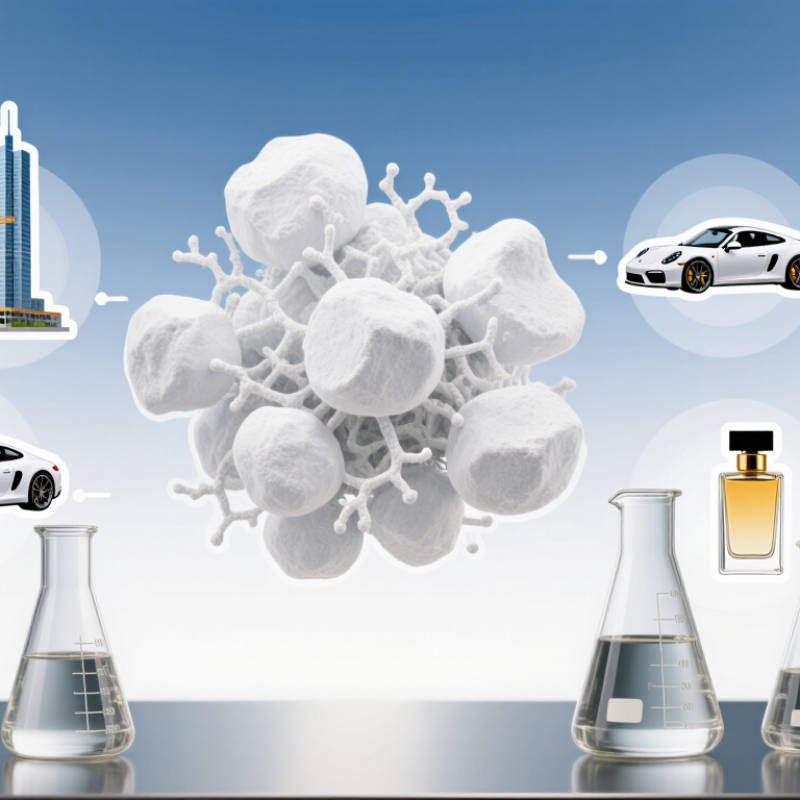
Fumed silica is a fine, pyrogenic powder used to control rheology, improve reinforcement, and reduce settling. For global buyers, two specifications deserve close attention: BET surface area and silicon dioxide purity. Common grades range from 50 to 400 m²/g, while qualified material often contains more than 99.8% SiO₂.
A higher BET value usually means smaller particles and stronger surface activity. It can improve thickening, but it may also increase dispersion difficulty and moisture sensitivity. Lower-area grades often mix more easily in sealants, coatings, and polymer systems.
The best choice depends on viscosity targets, mixing equipment, and final performance. More surface area is not always better.
Test the certificate carefully. Look for BET results, SiO₂ content, loss on drying, pH, bulk density, and sieve residue. Ask whether values represent one batch or a typical range. A supplier should provide traceable test methods and retain samples for comparison. Packaging also matters: damaged bags can introduce moisture, lumps, or foreign particles.
Small details matter here. Before approving a supplier, request a sample and run the same formulation test used in production. Laboratory data can look excellent, yet powder handling may feel completely different at factory scale. My own caution is simple: never select solely by purity or price. The practical balance between surface area, dispersion, consistency, and delivery reliability deserves equal weight.
10 Best Fumed Silica Suppliers for Global Buyers
A reliable ranking starts with evidence, not brochure language. ISO’s 2023 Survey recorded more than one million ISO 9001 certificates worldwide, yet certification alone cannot prove consistent fumed silica quality. Buyers should verify the certificate number, production site, scope, and expiry date. A supplier serving coatings, adhesives, or silicone applications should also provide batch-level records. Check surface area, moisture, pH, bulk density, and particle-size data against agreed specifications.
REACH compliance requires careful document review. The European Chemicals Agency’s public database supports substance and registration checks, but buyers should request written confirmation for the exact product, importer, and supply chain. A current safety data sheet is essential. So is an accurate registration or exemption explanation. COA transparency deserves equal weight. A useful COA shows the batch number, test method, sampling date, laboratory identity, and acceptance limits. Vague phrases such as “typical values” weaken supplier credibility. In practice, some documents look professional but omit the test method. That is a warning sign.
Tips: Ask each shortlisted supplier for three recent COAs, one SDS, and an ISO certificate copy. Compare numbers across batches. Request a small sample before a contract. Independent testing can reveal variation that paperwork misses. This step costs time, but a failed formulation costs more. Ranking should consider documentation quality, technical support, lead-time history, and corrective-action speed. A perfect scorecard is unrealistic; transparent weaknesses are often more trustworthy than polished promises.
Global buyers are comparing more than price. Recent market assessments from Grand View Research and MarketsandMarkets place fumed silica growth near 6–8% annually, driven by sealants, coatings, composites, and battery materials. Capacity claims still require careful verification.
Profile 1 is a large European integrated producer, offering hydrophilic and hydrophobic grades, with reported capacity above 50,000 metric tons yearly.
Profile 2 is a North American supplier focused on pharmaceutical and food-contact documentation.
Profile 3 serves Asia-Pacific with standard hydrophilic grades and shorter regional delivery times.
Profile 4 specializes in treated silica for silicone sealants.
Profile 5 supplies high-purity grades for electronics and specialty coatings.
Profile 6 combines precipitated and fumed silica production, helping customers adjust formulations.
Profile 7 operates flexible plants, commonly reporting capacity between 10,000 and 30,000 metric tons annually.
Profile 8 emphasizes low-metal grades for demanding applications.
Profile 9 supports private-label distribution across Europe, the Middle East, and Africa.
Profile 10 offers smaller batch production, useful for testing but less suitable for continuous manufacturing.
The European Chemicals Agency stresses substance identity, exposure controls, and technical documentation.
Buyers should request current safety data, particle-size information, surface treatment details, and audited production figures.
A capacity number without plant location is weak evidence.
I would also challenge “global coverage” claims; warehouse stock may not equal local manufacturing.
That distinction can affect lead times, customs planning, and quality consistency.
For global buyers, the ten best fumed silica suppliers should be ranked by application fit, not catalog size. MarketsandMarkets’ 2024 industry report estimates continued market growth through 2028, driven by coatings, adhesives, plastics, and silicone materials. This demand rewards suppliers that provide consistent surface area, structure, moisture content, and dispersion data. BET surface areas commonly range from about 90 to 400 m²/g, but higher values do not automatically deliver better performance.
Rheology needs controlled thickening without excessive yield stress. High-structure grades can improve sag resistance, yet they may complicate mixing. In reinforced elastomers and silicone compounds, particle structure, surface treatment, and dispersion quality influence tensile strength and tear resistance. Moisture-control applications require low water content and sealed packaging. A 2023 technical review in Industrial & Engineering Chemistry Research links silica surface silanol groups with adsorption and viscosity behavior, supporting careful grade selection. ISO 9277 testing can strengthen BET comparisons between suppliers.
Ask each supplier for recent batch certificates, particle-size data, loss-on-drying results, and application trials. Small pilot tests matter. Lab data can mislead. A grade that performs well in an epoxy system may fail in a solvent-free coating. Buyers should also check production capacity, export documentation, packaging integrity, and technical response time before approval. Supplier rankings remain partly subjective, because the “best” material depends on mixing energy, resin chemistry, target viscosity, and humidity exposure.
Buying fumed silica under HS Code 2811.22 starts with classification, not a supplier ranking. The code generally covers silicon dioxide, but customs treatment can differ by grade, coating, and national tariff notes. Confirm the six-digit code with a customs broker before issuing a purchase order. UN Comtrade trade records show silicon dioxide moving through major manufacturing and importing economies. However, recorded values vary sharply by purity and packaging. Average unit values are weak pricing benchmarks. Request the SDS, technical data sheet, batch certificate, and origin statement. Keep lot numbers visible on every pallet. Small detail, big protection.
Lead times often run three to eight weeks for standard grades. Customized surface treatment may take longer. This is an estimate, not a promise. ChemAnalyst’s 2024 price analysis indicates that energy, production capacity, and freight costs can shift quarterly quotations. Recent commercial ranges commonly sit near US$2–6 per kilogram before duties, depending on grade, volume, and destination. Treat that range carefully. A 25-kilogram bag may look cheap until moisture barriers, palletization, insurance, and port storage are added. Major container-freight indices also show rapid rate changes on important shipping lanes. Request both FOB and DDP offers with validity dates. I would test one pilot lot. Supplier questionnaires can look perfect; delivered powder may still bridge, settle, or clog equipment. That gap deserves a small trial budget.
| Rank | Supplier Profile | Typical Supply Region | Product Focus | HS Code | Typical BET Surface Area | Indicative Bulk Price* | Standard Lead Time | Common Packaging | Typical MOQ | Common Incoterms | Buyer-Fit Score |
|---|---|---|---|---|---|---|---|---|---|---|---|
| 1 | High-volume multinational producer | Western Europe / North America | Hydrophilic and hydrophobic grades for coatings, silicone, adhesives, and pharmaceuticals | 2811.22 | 90–400 m²/g | US$2.20–5.00/kg | 2–6 weeks | 10–15 kg multi-wall bags; palletized | 1–5 metric tons | FCA, FOB, CIF, DDP by quotation | 9.5/10 |
| 2 | Large integrated chemical producer | Central Europe | General-purpose reinforcing and rheology-control grades | 2811.22 | 100–300 m²/g | US$2.30–4.80/kg | 3–7 weeks | 10 kg bags; big bags subject to grade | 2–10 metric tons | FCA, CPT, CIF | 9.2/10 |
| 3 | Specialty surface-treatment producer | Western Europe | Hydrophobic silica for sealants, elastomers, cable compounds, and defoamers | 2811.22 | 100–300 m²/g | US$3.00–6.20/kg | 4–8 weeks | 10 kg bags with moisture barrier | 500 kg–5 metric tons | FCA, CIF, DAP | 9.0/10 |
| 4 | High-capacity Asian producer | East Asia | Industrial grades for paints, rubber, plastics, and construction chemicals | 2811.22 | 120–300 m²/g | US$1.45–3.20/kg | 3–8 weeks plus ocean transit | 10–15 kg bags; pallet or container loading | 1–20 metric tons | FOB, CFR, CIF | 8.8/10 |
| 5 | Cost-competitive regional producer | East Asia | Standard hydrophilic grades for adhesives, inks, and powder coatings | 2811.22 | 150–250 m²/g | US$1.30–2.70/kg | 2–6 weeks plus transit | 10 kg bags; export pallets | 500 kg–10 metric tons | FOB, CFR, CIF | 8.5/10 |
| 6 | Application-focused specialty supplier | Japan / South Korea | High-purity and controlled-particle-size grades for electronics and advanced materials | 2811.22 | 150–400 m²/g | US$3.50–8.00/kg | 4–10 weeks | 5–10 kg clean, moisture-resistant bags | 100 kg–2 metric tons | FCA, FOB, CIP, DAP | 8.4/10 |
| 7 | Middle East regional producer | Middle East | Industrial grades for cement additives, rubber, and coatings | 2811.22 | 100–250 m²/g | US$1.60–3.10/kg | 3–7 weeks | 10–15 kg bags; containerized export loads | 1–10 metric tons | FOB, CFR, CIF | 8.1/10 |
| 8 | Indian specialty chemical producer | South Asia | Standard and treated grades for rubber, personal care, and industrial formulations | 2811.22 | 120–300 m²/g | US$1.70–3.60/kg | 4–9 weeks plus transit | 10 kg bags; palletized export packaging | 500 kg–8 metric tons | FOB, CFR, CIF, DAP | 8.0/10 |
| 9 | Latin American distribution-led supplier | Latin America | Imported and locally stocked grades for coatings, construction, and adhesives | 2811.22 | 100–300 m²/g | US$2.40–5.20/kg | 1–4 weeks from local stock; 8–14 weeks for replenishment | 10 kg bags; local pallet delivery | 100 kg–5 metric tons | EXW, FCA, DAP, local delivery | 7.8/10 |
| 10 | Small-batch technical distributor | North America / Europe | Laboratory, pilot-scale, and formulation-development quantities | 2811.22 | 100–400 m²/g | US$4.00–12.00/kg | 3–15 business days from stock | 1–10 kg bags or jars; secondary containment | 25–500 kg | EXW, FCA, DAP | 7.6/10 |
Compare application fit, grade consistency, capacity, documentation, and delivery coverage. Price alone is insufficient. A supplier’s best grade may not suit your formulation.
Common options include hydrophilic, hydrophobic, treated, low-metal, and high-purity grades. Some suppliers also offer smaller batches for testing. Grade selection depends on resin chemistry, moisture, and mixing conditions.
Request audited production figures, plant locations, and current operating capacity. Reported capacity may range from 10,000 to over 50,000 metric tons annually. A large number proves little without evidence.
No. Warehouse stock does not necessarily mean local manufacturing. Check production locations, customs procedures, inventory levels, and regional lead times. Delivery promises can still disappoint.
BET surface areas often range from about 90 to 400 square meters per gram. Higher surface area does not automatically mean better performance. It may increase thickening and mixing difficulty.
Request recent batch certificates, particle-size data, moisture results, and surface-treatment details. Also ask for application trials and packaging specifications. Sealed packaging matters in moisture-sensitive uses.
Laboratory results may not match production behavior. A grade working in epoxy could fail in a solvent-free coating. Test mixing energy, target viscosity, dispersion, and humidity exposure.
Review current safety data, substance identity, exposure controls, and export documents. Check production records and quality consistency. Documentation can be incomplete, so ask twice.
Examine surface treatment, dispersion behavior, structure, tensile results, and tear resistance. Treated grades may improve reinforcement or rheology control. Performance still depends on the complete formulation.
This guide introduces the fundamentals of fumed silica, including its typical BET surface area range of 50–400 m²/g and SiO₂ purity above 99.8%. It explains how buyers can evaluate suppliers through ISO 9001 certification, REACH compliance, transparent certificates of analysis, consistent quality control, production capacity, and international distribution capabilities. The ranking also considers product-grade diversity, supply reliability, technical support, and the ability to serve different regional markets.
The article further connects material selection with key performance needs, such as rheology control, reinforcement, dispersion, and moisture management. It also provides a practical checklist for global purchasing, covering HS Code 2811.22, lead times, pricing structures, packaging, documentation, freight planning, and import coordination. For buyers comparing options such as Fumed Silica Vip, the guide emphasizes matching surface area, purity, treatment level, and application performance with the final product’s technical and logistical requirements.
